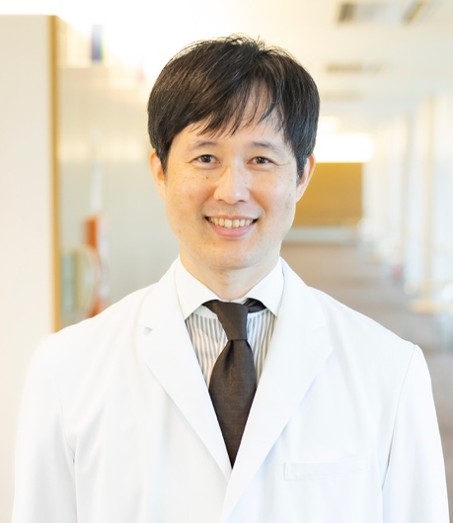
Brief Introduction
He joined the National Institutes of Radiological Sciences (NIRS, now part of QST) in 2009 and has been involved in carbon-ion radiotherapy for more than 15 years. His clinical and research interests focus on the development and clinical implementation of carbon-ion radiotherapy for pancreatic cancer.
Specialty
- Radiation oncology
- Carbon ion radiotherapy
- Pancreatic cancer
Education
- Feb. 2018: Ph.D., in clinical radiology, Graduate School of Medical Sciences, Kyushu University, Fukuoka, Japan
- 1997 - 2003: M.D., Kyusyu University School of Medicine, Fukuoka, Japan
Experience
- 2020 - Present: QST Hospital, National Institutes for Quantum Science and Technology, Chiba, Japan
- 2019: Ion Beam Therapy Center, SAGA HIMAT Foundation, Tosu, Japan
- 2018: Department of Clinical Radiology, Kyushu University, Fukuoka, Japan
- 2013: Ion Beam Therapy Center, SAGA HIMAT Foundation, Tosu, Japan
- 2012: Department of Clinical Radiology, Kyushu University, Fukuoka, Japan
- 2009: Hospital of Research Center for Charged Particle Therapy, National Institutes of Radiological Sciences (NIRS, now part of QST), Chiba, Japan
- 2003: Department of Clinical Radiology, Kyushu University, Fukuoka, Japan
Selected Publications
- Bhattacharyya T, Shinoto M, Takiyama H, Nitta Y, Koto M, Imai R, et al. Long-term outcomes of octogenarian pancreatic cancer patients treated with carbon ion radiotherapy. Pancreatology. 2022.
- Shinoto M, Terashima K, Suefuji H, Matsunobu A, Toyama S, Fukunishi K, et al. A single institutional experience of combined carbon-ion radiotherapy and chemotherapy for unresectable locally advanced pancreatic cancer. Radiother Oncol. 2018;129:333-39.
- Kawashiro S, Yamada S, Okamoto M, Ohno T, Nakano T, Shinoto M, et al. Multi-institutional Study of Carbon-ion Radiotherapy for Locally Advanced Pancreatic Cancer: Japan Carbon-ion Radiation Oncology Study Group (J-CROS) Study 1403 Pancreas. Int J Radiat Oncol Biol Phys. 2018;101:1212-21.
- Shinoto M, Yamada S, Terashima K, Yasuda S, Shioyama Y, Honda H, et al. Carbon Ion Radiation Therapy With Concurrent Gemcitabine for Patients With Locally Advanced Pancreatic Cancer. Int J Radiat Oncol Biol Phys. 2016;95:498-504.
- Shinoto M, Shioyama Y, Matsunobu A, Okamoto K, Suefuji H, Toyama S, et al. Dosimetric analysis of upper gastrointestinal ulcer after carbon-ion radiotherapy for pancreatic cancer. Radiother Oncol. 2016;120:140-4.
- Shinoto M, Nakamura K, Shioyama Y, Sasaki T, Nishie A, Asayama Y, et al. Prognostic Significance of a Minute Amount of Ascites During Chemoradiotherapy for Locally Advanced Pancreatic Cancer. Anticancer Res. 2016;36:1879-84.
- Shinoto M, Ebner DK, Yamada S. Particle Radiation Therapy for Gastrointestinal Cancers. Curr Oncol Rep. 2016;18:17.
- Mori S, Shinoto M, Yamada S. Four-dimensional treatment planning in layer-stacking boost irradiation for carbon-ion pancreatic therapy. Radiother Oncol. 2014;111:258-63.
- Shinoto M, Yamada S, Yoshikawa K, Yasuda S, Shioyama Y, Honda H, et al. Usefulness of 18F-fluorodeoxyglucose positron emission tomography as predictor of distant metastasis in preoperative carbon-ion radiotherapy for pancreatic cancer. Anticancer Res. 2013;33:5579-84.
- Shinoto M, Yamada S, Yasuda S, Imada H, Shioyama Y, Honda H, et al. Phase 1 trial of preoperative, short-course carbon-ion radiotherapy for patients with resectable pancreatic cancer. Cancer. 2013;119:45-51.
The role of radiotherapy in pancreatic cancer can be broadly categorized into three settings: (1) neoadjuvant treatment, (2) definitive treatment for unresectable disease, and (3) palliative treatment for symptom control, such as pain relief. In the phase III PREOPANC trial involving patients with resectable and borderline resectable pancreatic cancer, neoadjuvant chemoradiotherapy followed by surgery significantly improved survival compared with upfront surgery. In contrast, studies comparing neoadjuvant chemoradiotherapy with neoadjuvant chemotherapy alone have shown inconsistent results, highlighting the importance of appropriate patient selection. Furthermore, the clinical value of adding radiotherapy to systemic chemotherapy for locally advanced unresectable pancreatic cancer or postoperative locoregional recurrence remains a matter of ongoing debate.
Recent advances in radiation delivery techniques, including intensity-modulated radiotherapy (IMRT) and stereotactic body radiotherapy (SBRT), together with the development of particle therapy such as proton and carbon-ion radiotherapy, have enabled the safe delivery of higher radiation doses to tumors compared with conventional three-dimensional conformal radiotherapy (3D-CRT). Among these modalities, carbon-ion radiotherapy offers superior dose conformity and a higher biological effectiveness than either photon or proton therapy. These characteristics make it possible to achieve excellent local tumor control while minimizing radiation exposure to surrounding organs at risk, particularly the gastrointestinal tract.
This lecture will provide an overview of the current role and future potential of carbon-ion radiotherapy within multidisciplinary treatment strategies for pancreatic cancer, with particular emphasis on its contribution to improving R0 resection rates and achieving durable local control in postoperative locoregional recurrence.